




Remote monitoring, telemonitoring and teleconsultation are three terms that are frequently used interchangeably — yet they describe distinct practices, each with its own regulatory framework.
At Pixacare, we support healthcare institutions daily in documenting and monitoring wound healing remotely. Understanding where each practice sits legally is essential to using these tools correctly and confidently.
1. Remote patient monitoring
Remote patient monitoring allows a healthcare professional to track a patient's condition from a distance using clinical data — photographs, blood pressure readings, questionnaires, weight measurements — and to adjust treatment accordingly.
Regulatory framework
Remote patient monitoring is a regulated medical act (Article L6316-1 of the French Public Health Code) and has been reimbursed by national health insurance since 1 July 2023, through validated programmes.
At present, wound healing monitoring does not yet fall within the standard scope of reimbursed remote monitoring. Pixacare therefore currently operates within the framework of telemonitoring, pending future inclusion in official remote monitoring schemes.
2. Telemonitoring (télésuivi)
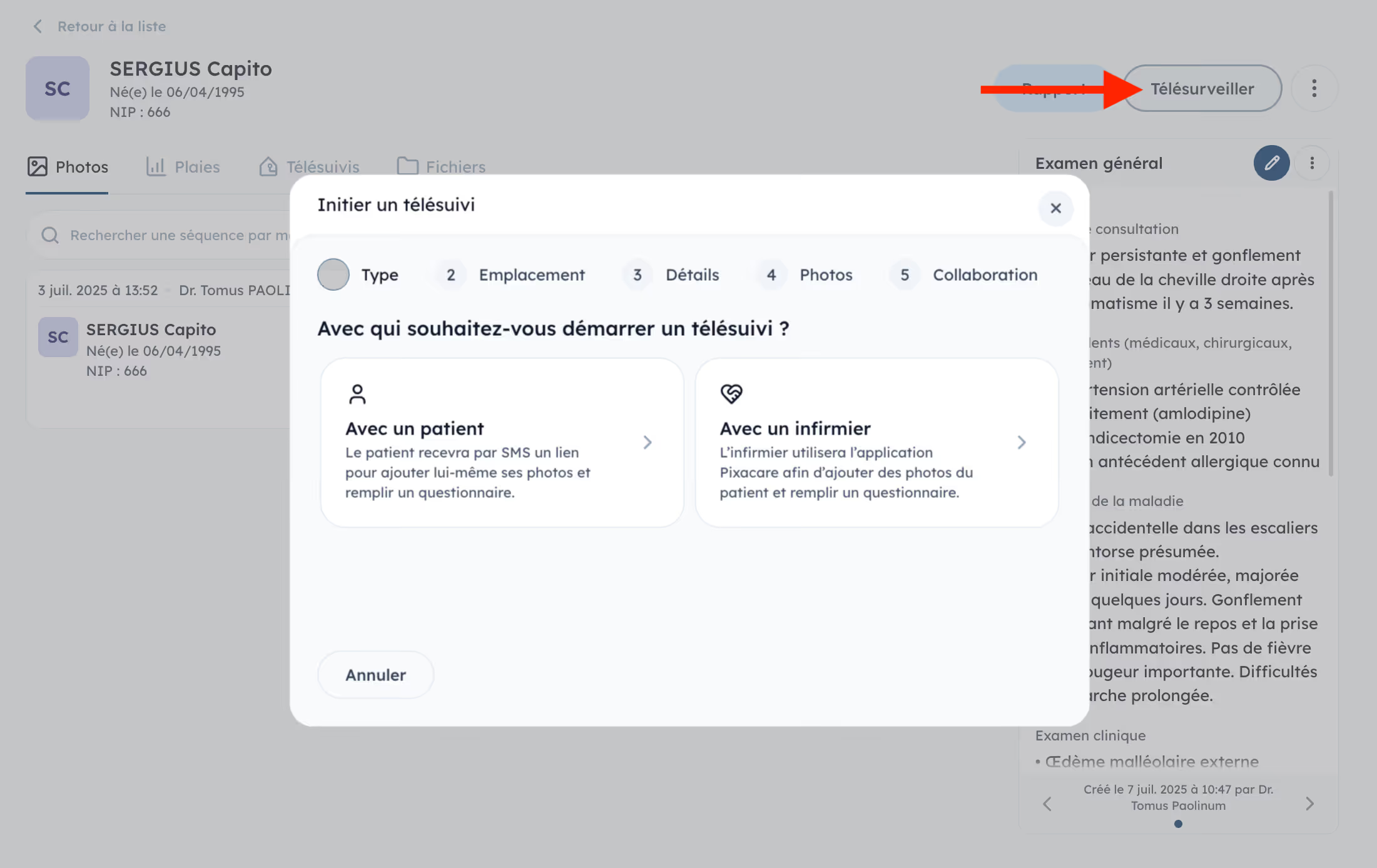
Telemonitoring refers to the remote follow-up of a patient through photographs or messaging, for conditions not yet eligible for reimbursed remote monitoring.
Regulatory framework
Telemonitoring does not yet have formal legal recognition, but its use is permitted provided it complies with data security, confidentiality and patient consent requirements.
How Pixacare is used
Pixacare is widely used for telemonitoring across dozens of hospitals, through its dedicated modules for patient-led or nurse-assisted remote follow-up.
Examples of use
- Home monitoring of a patient with a diabetic foot wound, enabling early detection of deterioration without an emergency visit
- After surgery, the patient submits photographs and a health update via a simple SMS link — the hospital can remotely verify that healing is progressing without signs of surgical site infection (SSI)
- Collaboration between a care home and external physicians to share and track the wound evolution of residents

3. Teleconsultation between professionals
Teleconsultation between professionals allows a healthcare practitioner to seek a remote second opinion from a colleague — for instance, a nurse sharing a wound photograph with a physician to confirm the appropriate course of action.
Regulatory framework
This practice has been formally recognised and reimbursed since 2019. Specific billing codes (TLE1 and TLE2) govern its use:
- Remuneration of €10 to €20 for both the requesting and the expert practitioner
- A limit of 500 acts per year per practitioner
How Pixacare is used
Through partnerships with Rofim and Omnidoc, Pixacare enables practitioners to:
- Document a case remotely (photographs, questionnaires, follow-up reports)
- Transmit data securely to the teleconsultation platform
- Avoid duplicate data entry and save time within the care pathway
Examples of use
- A general practitioner seeks a dermatologist's opinion on a suspicious lesion
- A community nurse shares a wound photograph with a hospital surgeon to adjust the patient's care plan
Summary
Telemonitoring
- Objective: Ongoing patient follow-up over time
- Stakeholders: Referring clinical team and patient
- Reimbursement: Not yet
- Pixacare use: Patient or nurse-led follow-up module
Teleconsultation between professionals
- Objective: One-off opinion between professionals
- Stakeholders: Physicians, nurses, specialists
- Reimbursement: Yes, via TLE1/TLE2 codes
- Pixacare use: Omnidoc / Rofim integration
Key takeaways
Telemonitoring covers the continuous follow-up of a patient by their referring clinical team. Teleconsultation between professionals is a one-off request for a second opinion. Both practices are complementary and form part of a coordinated, remote care pathway.

